6 stress-relief actions if your heart races after a bad night
Hi everyone, it’s Amilie. After a bad night’s sleep, sit down, slow your breathing, drink a little water, and observe your symptoms without panicking. Stress and lack of sleep can make your heartbeat more noticeable, but warning signs call for urgent help. A few simple steps can help you regain your calm. The goal: take care of yourself while knowing when to seek medical advice.
Do this right away:
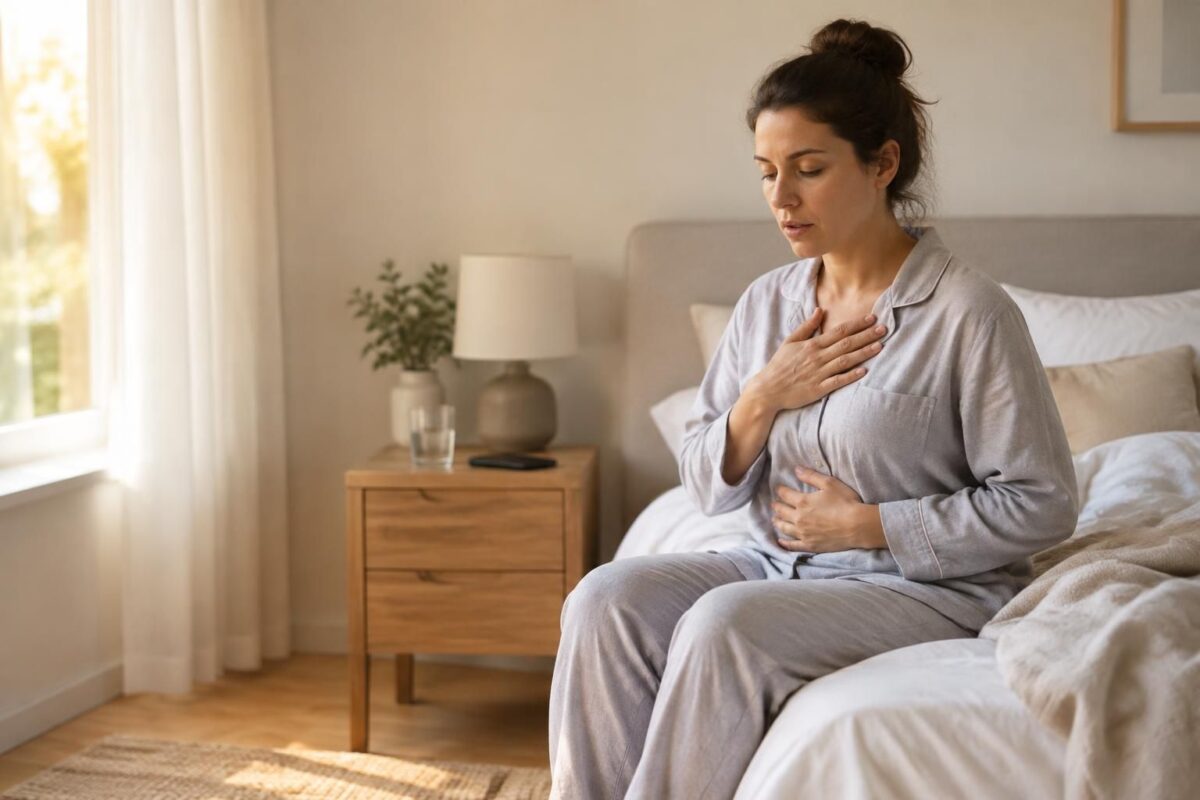
- Stop what you’re doing and sit somewhere quiet.
- Loosen any tight clothing and place your feet on the floor.
- Try deep breathing: breathe in gently, then breathe out for longer, without forcing it.
- Drink a glass of water if you can swallow normally.
- For now, avoid coffee, cigarettes, energy drinks, and strenuous activity.
Palpitations can occur after a restless night, when you’re stressed, or after consuming a stimulant. To better understand these reactions, you can read why stress can make your heart beat faster and learn to recognize the signs that require medical advice.
Six ways to calm your heart after a bad night’s sleep
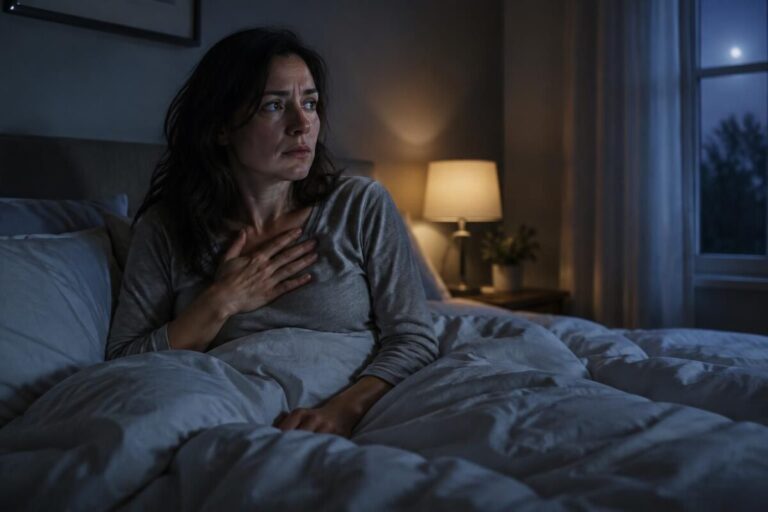
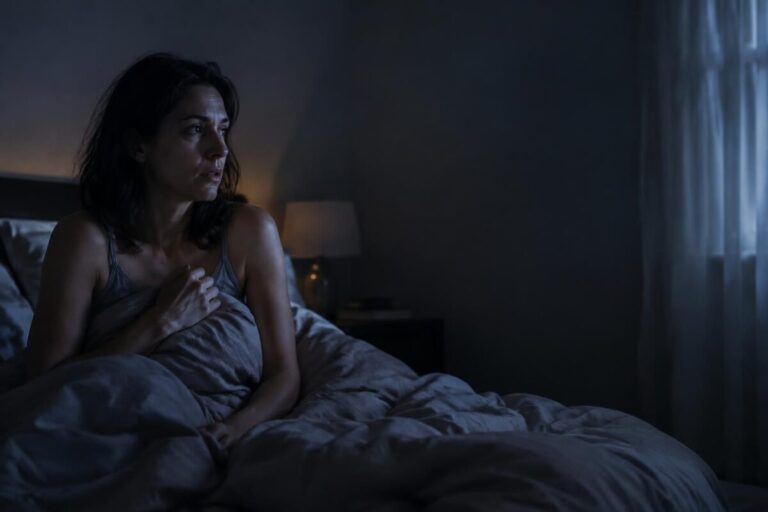
Waking up with a racing heart can be frightening. The quiet of the morning can sometimes make you more aware of every beat, and worry can intensify the sensation. Take things slowly: the point isn’t to control every beat, but to keep yourself safe and see how things develop.
1. Rest and observe
Sit down or lie in a comfortable position. Make a mental note of when the palpitations started, what you were doing, and whether they ease when you rest. Avoid standing up suddenly.
2. Slow your breathing without holding it
Breathe in calmly through your nose, then slowly breathe out through your mouth. Repeat for a few cycles, without trying to take deep breaths if that feels uncomfortable. Slow breathing can help your body gradually come out of its alert state.
3. Consider hydration and stimulants
Drink a little water, especially if you haven’t had much to drink or the night was hot. Avoid coffee, strong tea, nicotine, and energy drinks for now: these stimulants can contribute to a faster heart rate in some people. Hydration supports your overall well-being, but it doesn’t replace medical advice.
4. Take it easy for the rest of the morning
After a bad night’s sleep, your body may be more sensitive to stress and exertion. If possible, put off non-urgent tasks, eat something simple, and give yourself some time to rest. Relaxation doesn’t have to be complicated: a few quiet minutes may be enough to take a break.
5. Look for triggers and recurrences
Make a note of the time, approximate duration, drinks you’ve had, and any other symptoms. If the episodes keep recurring, happen during exertion, or last longer than usual, talk to a healthcare professional. A doctor can decide whether a heart rhythm test would be helpful.
6. Get help if you have warning signs
Chest pain or pressure, severe shortness of breath, feeling faint, loss of consciousness, or severe dizziness require a rapid response. Call 15 or 112 if your symptoms are sudden or severe; don’t drive yourself. If in doubt, it’s better to ask for advice than to be alone with your worries.
A simple three-step plan
- Step 1: Stop, sit down, and check whether you have chest pain, feel faint, or are having significant difficulty breathing.
- Step 2: If there are no emergency warning signs, breathe slowly, drink a little water, and see whether your heartbeat settles while you rest.
- Step 3: Make a note of the episode and contact a doctor if the palpitations return, persist, or worry you.
How to tell the difference between an isolated episode and an emergency
If it’s a brief episode with no other symptoms that eases with rest, observe how it develops and make a note of the circumstances. If your heart is beating rapidly and you also have pain, marked shortness of breath, or feel faint, call emergency services.
| What you notice | Helpful response |
|---|---|
| Rapid heartbeat after a short night, with no other discomfort | Rest, calm breathing, and observation |
| Episodes that recur or last a while | Make an appointment with a doctor |
| Chest pain, feeling faint, or severe shortness of breath | Call 15 or 112 |
A common example: after an almost sleepless night, someone notices their heart pounding as soon as they get up and becomes increasingly worried as they keep checking their pulse. Sitting down, breathing gently, and asking someone close to them for help can make the moment less difficult, but it doesn’t replace a medical consultation if the symptoms persist.
A simple reminder: “Listening to your body means responding calmly, not ignoring the signals.” Managing anxiety can help you get through the moment, but only a professional can assess the cause of recurring palpitations. Lack of sleep can make you more sensitive to stress during the day; however, it isn’t enough to explain every episode.
When should you seek medical advice for palpitations after a short night’s sleep?
You should seek medical advice if the episodes recur, last a while, happen during exertion, or are accompanied by other symptoms. Palpitations can have various causes: a doctor can assess them based on your health and the circumstances.
Can stress make it feel like your heart is racing?
Yes, stress can speed up your heart rate and make your heartbeat more noticeable. If this happens often or is accompanied by unusual signs, seek medical advice.
What should I do right away if I have palpitations?
Stop what you’re doing, sit down, breathe slowly, and drink a little water if you can. If you have chest pain, feel faint, or have significant shortness of breath, call 15 or 112.
Can a bad night’s sleep alone explain a racing heart?
Lack of sleep can make you more sensitive to stress, but it cannot by itself identify the cause. Seek medical advice if the episodes persist or recur.
Should I seek medical advice if the palpitations stop quickly?
Not necessarily as an emergency if the episode is brief and there are no other symptoms, but talk to a doctor if it returns, gets worse, or worries you.
Thank you for your interest; Amilie